That warm, honey-toned cedar fence in your Magnolia backyard looked amazing when it was new, didn’t it? Fast-forward a few rainy seasons and… your neighbor’s version is now streaked with gray, tinged with moss, and warped at the bottom. It’s a common sight in Seattle—and a clear sign that cedar fence maintenance Seattle is crucial to help it thrive in our climate.
Between the near-constant drizzle, salt air blowing in from the Sound, and shady yards that never quite dry out, your fence takes a beating year-round. And the truth is, untreated cedar doesn’t stand a chance for long.
If you’re wondering:
“Do I really need to treat my cedar fence?” → Yes. Unless you’re going for the silvery driftwood look—and even then, you’ll still want to protect it from rot.
“How should I clean it?” → Skip the pressure washer. It’ll do more harm than good. A soft scrub with oxygen bleach is safer for the wood grain and still gets the job done.
Let’s break down the real challenges of maintaining cedar in Seattle—and how to fight back with the right prep, cleaning methods, and sealing techniques. Around here, maintenance isn’t just recommended. It’s survival.
Why Cedar Struggles in Seattle—and What You Can Do About It
Cedar is naturally rot-resistant, but even the best wood can’t keep up with Seattle’s conditions without help. With over 38 inches of rain a year, salty breezes, shady microclimates, and sticky clay soil, cedar fence maintenance Seattle is essential to prevent rapid decay.
Here are four common local threats that quietly wear down even the sturdiest cedar fences:
- Moss & Algae (Think Ballard and Phinney Ridge)
Moss looks harmless, but don’t be fooled—it’s like a sponge that holds moisture against your fence. Over time, that trapped water starts to rot the boards from the inside. Shady backyards? Moss heaven. - Salt Air (Alki, Magnolia, Bainbridge Island)
Living near the water is great, but salt air is brutal on fences. It strips away protective finishes faster and draws moisture deep into the wood grain, speeding up rot. - Clay Soil Splashback (Bellevue, Kirkland, Renton)
On the Eastside, clay soil splashes onto fence boards and holds moisture at the base. That dark, wet zone near the ground is where we see rot kick in first—especially when it never really dries out. - UV Damage + Constant Moisture
Even on cloudy days, UV rays break down the wood’s natural fibers (lignin), turning the surface gray and brittle. Add Seattle’s nonstop rain, and you’ve got constant swelling and shrinking—perfect conditions for cracking, warping, and mold.
Inline Fence Tip:
“We’ve seen beautiful cedar turn dull and gray in under two years near Green Lake. And in Alki, fences start rotting by year three if left untreated. But when our team follows the full clean-and-seal process? That same cedar holds up beautifully for a decade or more.”
Seattle-Proven Cedar Cleaning: Gentle is Key
Pressure Washers = Fence Wreckers. Here’s What Actually Works.
After restoring more than 1,200 fences across Seattle, we’ve seen firsthand the kind of irreversible damage a pressure washer can do to cedar. Instead of cleaning the surface, it tears into the grain—leaving fibers fuzzy, frayed, and looking more like old rope than wood.
If you’re planning to stain or seal your fence, how to clean a cedar fence before staining matters just as much as what you put on it. Here’s how to prep it the right way—without wrecking it in the process.
What You’ll Need:
- ✅ Soft-bristle brush (nylon or cedar-safe—no wire brushes, ever)
- ✅ Oxygen bleach powder (never chlorine—it’s too harsh for wood)
- ✅ Garden sprayer, bucket, and a hose with a spray nozzle
Pro Mix:
1 cup of oxygen bleach powder + 1 gallon of warm water → mix thoroughly until dissolved.
Step-by-Step: How to Deep Clean a Cedar Fence in Seattle
- Dry Brush
Scrub off surface dust, pollen, and loose debris with your dry brush. Start from the top and work your way down. - Pre-Wet the Wood
Lightly mist the fence with clean water—don’t soak it, just get it damp. - Apply Cleaning Solution
Spray the oxygen bleach mix generously. Watch for drips—too much runoff means wasted cleaner. - Let It Work (Dwell Time: 15–20 mins)
Keep the wood wet during this time—if it dries out in the sun, you’ll need to reapply. - Gentle Scrub
With your soft brush, scrub with the grain. Focus on mossy patches or mildew-prone spots. - Rinse Thoroughly
Use your hose to rinse downward with low pressure. Don’t leave behind any cleaner—it can interfere with stain adhesion later. - Let It Dry—Really Dry ☀️
This is the hardest part in Seattle. You need at least 72 hours of solid dry weather. Check the UW Atmos forecast before you start.
🍃 Bonus Moss Tip:
For extra-stubborn moss:
Spot-treat it the night before cleaning with a 50/50 mix of white vinegar and water. Let it sit overnight. Rinse well before applying your oxygen bleach mix.
🧪 Is It Dry Enough to Stain?
Tape a 12”x12” piece of clear plastic to the fence. After 24 hours, check for condensation underneath:
- If it’s dry → You’re good to go.
- If it’s foggy or wet → Wait it out. Restart the 72-hour clock.
The Hard Truth: In Seattle, Treating Cedar Isn’t Optional
Let’s be real for a second:
Does a cedar fence need to be treated in Seattle?
Short answer? Absolutely.
We’ve worked on fences from salty Alki backyards to the mossy corners of Ballard, and here’s what we’ve learned:
When left untreated, even the highest-quality cedar slowly gives in to the Pacific Northwest.
It doesn’t fall apart all at once—it phases out:
- Year 1–2: That warm cedar glow fades into gray. Instagram might love the “Seattle patina,” but it’s a warning sign.
- Year 3: Cracks deepen. Water works its way in.
- By Year 5: Rot sets in at the base—faster if your fence is near salt air, shady firs, or clay-heavy soil.
In some areas—like Alki, Bainbridge, or anywhere along the Eastside with clay splashback—that five-year timeline shortens to three. The wood just can’t keep up without help.
🧪 When You Must Treat Your Fence:
- You’re within 1 mile of Puget Sound (salt = speed rot)
- Your yard sits under shady conifers (hello, constant damp)
- The fence is over 2 winters old and hasn’t been sealed
- You’re starting to see gray creep in
The only real exceptions?
South-facing fences on high, dry slopes—think Queen Anne hilltops—or if you’re okay with sacrificing years of lifespan for that silvered driftwood look.
Inline Fence Says:
“For 90% of Seattle homes, sealing cedar isn’t just a nice idea—it’s protection. Skip it, and don’t be surprised if you’re swapping out warped boards well before the 10-year mark.”
Seattle-Tested Armor: How to Seal & Stain Cedar the Right Way
When it comes to sealing cedar in Seattle, product choice isn’t just about color or finish—it’s about survival strategy. Cedar fence maintenance Seattle is key, as the right stain can make the difference between a fence that weathers gracefully and one that fails before its time.
Different neighborhoods, microclimates, and soil types call for different defenses. Here’s what we recommend based on the threats we’ve seen on the job:
Pick Your Weapon: Fence-Stain Matchups by Zone
🌊 Threat | ✅ Best Products | 💡 Why It Works in Seattle |
|---|---|---|
Salt Air (Alki, Magnolia) | Penofin® Marine Oil, TWP® Marine | Blocks salt and moisture intrusion |
Clay Soil (Bellevue, Renton) | Ready Seal®, Armstrong Clark® | Designed to handle dampness + stain resistance |
Moss & Mildew Zones (Ballard, Phinney Ridge) | TWP® 1500, Defy® Extreme | Breathable sealants that fight fungal buildup |
All-Around Defender (Green Lake, Capitol Hill) | Messmer’s® UV Plus, Sansin® DEC | UV + rain protection that holds up |
Application Rules: Where Fences Are Made or Broken
End Grain First
Start by saturating post tops, bottoms, rail ends, and joints. These thirsty parts absorb stain like a sponge—give them a 15-minute soak-in head start.
Thin Layers > Thick Globs
Apply two light coats instead of one heavy one. Thick application traps moisture and causes blistering.
Brush Beats Sprayer
Brushes push the product deep into the wood grain. If you spray, plan on going over everything twice.
Horizontal Surfaces Need Extra Love
Rail tops take the brunt of Seattle’s rain. Flood them with extra sealant—they’re ground zero for rot.
Post Caps Aren’t Just Decorative
Install them before your second coat. They redirect water, and UW Botanic studies show they prevent up to 90% of post-top rot. 🎓🌧️
Mind the Dew Point
Start early—when the dew point is at least 5°F below air temperature, and the forecast shows 24+ dry hours ahead. Moisture hiding in the wood = bad adhesion.
🚫 What Not to Do (If You Want It to Last)
- Wrong Product: Avoid latex or water-based coatings. They peel. Always choose cedar-rated penetrating oils.
- Wrong Timing: Don’t apply stain in direct sun or if it’s hotter than 90°F. Humidity over 65%? Wait it out.
Inline Fence Wisdom:
“Seattle doesn’t forgive shortcuts. But when you follow this protocol, cedar can last 15+ years—even in salt air or mossy shade.”
The Real-World Cedar Fence Calendar: Puget Sound Edition
Seattle weather doesn’t follow the rules—so your cedar fence maintenance Seattle calendar shouldn’t either. Here’s a seasonal cheat sheet to help your cedar fence stand strong through salt spray, moss attacks, and that long, soggy gray season we call “winter.”
Season | What to Do | Why It Matters Here |
🌱 Spring (Mar–Apr) | Check for moss or mildew | Winter growth loves shady Seattle yards. Tackle it before summer heat bakes it in. |
🌤️ Early Summer (June) | Light cleaning (if needed) | Preps the surface for peak staining weather. Dry boards = better seal. |
☀️ Peak Summer (July–Aug) | Stain or seal (prime time!) | Our driest stretch. Give the sealant time to soak in and cure fully. |
🍂 Fall (Oct–Nov) | Add sealant touch-up (if needed) | Think of it as a waterproof jacket before the rain returns in force. |
❄️ Winter (Feb) | Check for salt buildup | Especially near the Sound. Salt invites rot. If you see a white film, rinse it off gently. |
3 Seattle Mistakes You Do Not Want to Make
(Seriously—We’ve Seen the Aftermath)
Seattle may be green and gorgeous, but it’s brutal on fences. Over the years, we’ve repaired hundreds of avoidable failures—usually caused by these common missteps. Cedar fence maintenance Seattle can help you steer clear of these issues.
🚫 Mistake #1: Sealing Damp Wood – AKA “The Sauna Trap”
What goes wrong:
You stain your brand-new cedar fence thinking it’s dry, only to watch it bubble, peel, and fail within months. Like a bad sunburn, but more expensive.
Why it happens:
Seattle’s “dry” days can fool you. The surface might feel dry, but inside? That wood’s still holding moisture like a sponge. Seal it too soon, and you trap all that vapor beneath the finish—guaranteeing blisters and adhesion failure.
How to avoid it:
👉 Wait for 72+ dry hours.
👉 Do the plastic test: tape a clear sheet to the fence overnight. If there’s fog or condensation in the morning, it’s still too wet. Be patient—it pays off.
🎨 Mistake #2: Using Paint or Opaque Stains
What goes wrong:
You wanted a solid, bold look… but now your cedar is cracking, peeling, and maybe even hiding rot beneath that thick, suffocating finish.
Why it happens:
Cedar isn’t like treated pine—it breathes. Opaque stains and paint trap moisture under the surface, turning your beautiful fence into a moldy rot farm in disguise.
How to avoid it:
✅ Use penetrating oil-based sealants—transparent or semi-transparent.
These soak into the wood, protect from within, and let cedar be cedar. Natural grain + natural defenses = smart, beautiful choice.
⚠️ Mistake #3: Ignoring the Flat Spots (Top Rails & Posts)
What goes wrong:
Everything looks fine until one day your fence panel wobbles—or worse, collapses. The hidden rot started at the top, where water sits and slowly eats away at the structure.
Why it happens:
Flat surfaces + rain = rot. Post tops and horizontal rails soak up water like a sponge. If they’re left unsealed or uncapped, they become the weak points.
How to avoid it:
🛡️ Armor the ends and tops.
- Flood-seal all end grain—it soaks up moisture 10x faster than the rest.
- Give extra coats to horizontal surfaces.
- Cap your posts! Seriously, it’s the cheapest insurance policy in the game.
✨ Keep Your Cedar Thriving in the Emerald City
Seattle weather can be unforgiving—but with the right care, your cedar fence doesn’t have to be a casualty. Cedar fence maintenance Seattle involves understanding our unique threats (salt spray, mossy shade, clay soil, and endless damp), using gentler cleaning methods, and sealing smart at the right time with the right products to keep that fence looking sharp and standing strong.
Remember: Regular care beats costly repairs.
So grab your brush, check the forecast, and show that fence a little love—your future self (and your yard) will thank you.
Seattle’s damp charm is legendary… but it’s also a cedar fence’s sneaky nemesis. We’ve patched, repaired, and replaced more cedar than we care to admit, and these three blunders keep showing up on our work orders, costing homeowners serious cash. Learn from their woes!
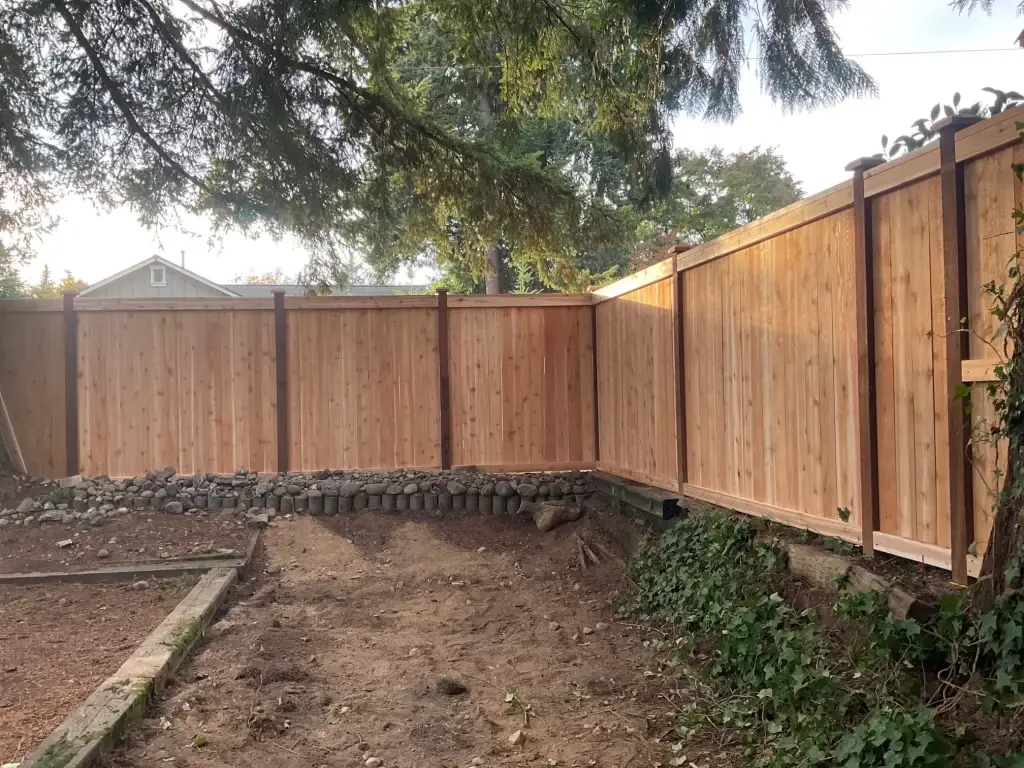
Your Cedar’s First Line of Defense: Build It Right from Day One
At Inline Fence, we don’t just build fences—we build defenses.
Seattle’s climate is beautiful, but brutal. From the salt-laced air in Magnolia to the moss-heavy shade in Phinney Ridge, every yard brings its own battle. That’s why we treat every cedar fence like a long-term investment—not just a quick curb appeal upgrade.
We’ve installed over 1,200 cedar fences across Ballard, Alki, and the Eastside since 2016. And here’s what we’ve learned: survival starts with smart construction.
What Sets Our Builds Apart
We don’t cut corners. We build for longevity from the first post.
- We Engineer, Not Guess.
Every build considers end grain vulnerabilities, pooling water on flat surfaces, and Seattle’s shifting microclimates. - We Don’t Say “Seal It Later.”
We plan installations around the right weather window so staining and sealing can happen when it matters most—and we guide every homeowner through the first-year maintenance that truly makes a difference. - We Put Longevity First.
From the wood we choose to how we set posts, our approach is based on hard-earned experience—not speed.
“Half-measures rot by February. We build fences that last for decades—not just until the next rainy season.”
So whether you’re in a wind-swept lot near the Sound or a shady corner of Capitol Hill, cedar fence maintenance Seattle will ensure your cedar fence is ready to handle whatever the PNW throws at it.
🌲 Dream Cedar. Built for Seattle.
Let’s build your fence the right way—beautiful, durable, and ready for the long haul.
👉 Get a Climate-Smart Installation Quote